

Quitclaim deeds get a bad rap for being complicated legal documents. However, they’re honestly just a one-page form that says you’re giving your property rights to someone else.If you’re trying to transfer ownership quickly or avoid delays with the county recorder, working with Fort Worth cash buyers can make the process much smoother and faster. The hard part isn’t the deed itself. It’s knowing where to go and how to avoid screwing up the small details that could send you back to square one.
In Fort Worth, filing a quitclaim deed is not difficult once you know the steps. You’ll spend maybe two hours total on this whole thing, most of it just driving to get signatures and drop off paperwork. Here’s everything you need to know to get it done without the headache.
What Is a Quitclaim Deed and When Is It Used in Texas?
A quitclaim deed transfers whatever ownership interest you have in a property to someone else. The catch is that you’re not making any promises about what that interest actually is. You could own the whole property, half of it, or nothing at all, and the quitclaim deed still works the same way.
That’s different from a warranty deed, where you’re guaranteeing a clean title and full ownership. Most people use quitclaim deeds when they’re transferring property to family members, adding a spouse to the title, fixing a divorce settlement, or cleaning up paperwork after an inheritance.
You already know the situation with the property, so you don’t need all the extra protections that come with other types of deeds.
Steps to File a Quitclaim Deed in Fort Worth, TX
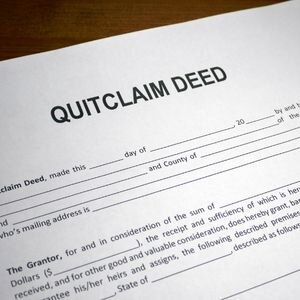
The whole process follows a simple sequence and each step only takes a day or two of actual work on your part. Here’s what you’ll do from start to finish.
Step 1: Obtain the Correct Quitclaim Deed Form (1 to 2 Days)
You can grab a Texas quitclaim deed form online from a bunch of legal document sites. You can also pick one up at the Tarrant County Clerk’s office if you’d rather see it in person first.
The form itself is quite basic. It’s got blanks for the grantor (that’s you, the person giving up the property), the grantee (whoever’s getting it), and the property details.
Just make sure you’re using a form that’s specifically for Texas because every state has slightly different requirements. You don’t want to deal with rejection notices because you used the wrong template.
Some people hire a real estate attorney to draft the deed for them. This is totally fine if you want that extra layer of protection, but most people just download the form and fill it out themselves.
Step 2: Fill Out the Deed with Accurate Information (1 to 3 Days)
You need to slow down and triple-check everything because one typo can mess up the whole thing. You’ll write in your full legal name exactly as it appears on the current deed, then do the same for whoever’s receiving the property.
The addresses need to be current and complete. There should be no shortcuts like “Fort Worth” when you should be writing out the full street address with the ZIP code.
You also need to include the legal description of the property, which we’ll get into in the next section, but just know that “123 Main Street” isn’t going to cut it here. The county wants the official legal description that matches what’s on file. Take your time with this part because if something’s wrong, you’ll have to redo the whole form and start over.
What Documents You’ll Need
You’ll need a copy of your current property deed so you can match the legal description exactly. Get your driver’s license or another form of government-issued ID because the notary’s going to ask for it when you sign.
If you’re married and the property is in both names, your spouse needs to be there with their ID, too. Some people also keep a copy of their property tax statement handy just to verify the address and legal description, but that’s more of a safety net than a requirement.
Step 3: Include the Property’s Legal Description (Same Day If You Have Documents Ready)
The legal description is not your street address. It’s that weird paragraph full of lot numbers, block numbers, and subdivision names that looks like it was written by someone who really loves being overly specific. You can find this on your current property deed, your mortgage documents, or your property tax statement from Tarrant County.
Copy it word for word and comma for comma. Even a small mistake here can hold up your filing or make the deed invalid. Don’t try to paraphrase it or clean it up to make it sound better.
The county clerk needs to see the exact same description that’s already on file for your property. Treat it like you’re copying someone’s phone number and get every single digit right or the call won’t go through.
Step 4: Sign the Document in Front of a Notary (Timeline: Same Day)
Texas requires the grantor to sign the quitclaim deed in front of a notary public and this isn’t optional. You can’t just sign it at home and then get it notarized later. The notary has to watch you sign it in real time.
Most banks offer free notary services if you’re a customer or you can hit up a UPS store, FedEx Office, or any local notary service. Bring your government-issued ID because the notary will check it before they stamp and sign your deed.
If the property is jointly owned, everyone who’s listed as a grantor needs to be there at the same time with their IDs ready. The notary will fill out their section and add their official seal. Once that’s done, you’re ready to move on to the final step in How to Sell Your Home to Pay Off Debt in Fort Worth, TX!
Step 5: File the Deed with the Tarrant County Clerk (Same Day for Filing, 2 to 4 Weeks for Processing)
Once your deed is signed and notarized, you need to take it to the Tarrant County Clerk’s office to make it official. They’ve got locations in downtown Fort Worth and a few other spots around the county, so pick whichever one’s closest to you.
You can file in person during business hours, which is usually the fastest way to get it done. You can also mail it in if you don’t feel like making the trip.
When you get there, hand over your notarized deed and pay the recording fees. They’ll stamp it with the date and time. That stamp is what makes your deed transfer legally binding in Texas. The clerk will keep the original and give you a stamped copy for your records. Then your deed goes into the queue for processing and gets added to the public record.
How Much Are Recording Fees in Fort Worth
Recording fees in Tarrant County run about $25 for the first page and $4 for each additional page. That means you’re looking at around $30 to $35 for a standard quitclaim deed.
Some people pay extra fees if their deed has a bunch of attachments or if they need certified copies, but the basic filing fee is pretty reasonable. You can pay with cash, check, or card at most clerk locations, so bring whatever works for you.
If you’re mailing it in, you’ll need to include a check made out to the Tarrant County Clerk. It’s smart to call ahead to confirm the exact amount so your filing doesn’t get delayed.
What Happens After You File
The county clerk takes your deed and gets it recorded into the official property records. This usually takes anywhere from two to four weeks, depending on how backed up they are.
You don’t have to do anything during this time. You just wait for the process to finish. Once it’s recorded, the deed becomes part of the public record. This means anyone can look it up and see that the property transfer happened.
The grantee is now the official owner (or co-owner, depending on what you set up), and that’s it. You’re done. If you want proof that everything went through, you can request a certified copy of the recorded deed from the clerk’s office for a small fee. A lot of people do this just to have documentation for their records.
Some people also notify their title company or mortgage lender about the transfer. This is essential if there’s still a loan on the property, because they’ll want to know who’s on the title now.
What Are Some Common Mistakes When Filing Quitclaim Deeds

Most of the mistakes listed here are totally avoidable if you just slow down and pay attention to the details.
Not Including a Complete Legal Description
This is the number one reason quitclaim deeds get rejected. People think they can just write down the street address and call it a day. However, Texas requires that full legal description with all the lot numbers, block numbers, and subdivision details.
If you leave out even one piece of that description or copy it wrong, the clerk won’t accept your deed. Go back to your original property deed or tax statement and copy that legal description exactly as it appears.
Don’t abbreviate anything or try to simplify it. Don’t wing it from memory. Get it right the first time or you’ll be filling out a whole new form.
Forgetting to Get the Deed Notarized
You can’t file a quitclaim deed in Texas without a notary’s signature and seal. That means if you sign it at home and then try to take it to the clerk’s office, they’re going to turn you away.
The notary has to watch you sign the document. That’s the whole point of notarization. Some people think they can add the notary part later or that it’s optional for family transfers, but it’s not.
Texas law requires it for every single quitclaim deed, no exceptions. Make the notary appointment before you fill out the form, or at least make sure you know where you’re going to get it notarized before you put pen to paper.
Filing in the Wrong County
This seems obvious, but people get confused when they live in one county and the property is in another. You have to file the quitclaim deed in the county where the property is located, not where you live.
So if your house is in Fort Worth but you live in Dallas, you’re filing in Tarrant County no matter what. The deed won’t be valid if you file it in the wrong place. You’ll have to start over and pay the recording fees again in the correct county. Double-check the property address before you make the trip to the clerk’s office.
Differences Between Quitclaim Deeds and Other Property Deeds
Quitclaim deeds are just one way to transfer property in Texas and they’re definitely not the best choice for every situation. The main difference comes down to guarantees or in this case, the complete lack of them.
Quitclaim Deed vs. Warranty Deed
A quitclaim deed doesn’t promise anything about the title. You’re not saying the property is free of liens; you’re not guaranteeing you actually own it. You’re not taking responsibility if something goes wrong later. You’re basically handing over whatever rights you have and walking away.
A warranty deed is the opposite. It comes with promises that you own the property free and clear, that there are no hidden liens or title issues. It also says that you’ll defend the buyer if someone shows up later claiming they own the place.
That’s why warranty deeds are standard for real estate sales. Buyers want protection and sellers are willing to back up their claims with legal guarantees.
Quitclaim Deed vs. Grant Deed
Grant deeds fall somewhere in the middle between quitclaim and warranty deeds. They give you some basic guarantees, like the grantor hasn’t already sold the property to someone else and hasn’t created any secret liens. They don’t offer the full protection of a warranty deed.
Texas doesn’t use grant deeds as often as some other states. They pop up occasionally in commercial transactions or specific legal situations where people want more protection than a quitclaim but don’t need the full warranty treatment.
Tax Implications of a Deed Transfer in Texas

Transferring property with a quitclaim deed doesn’t automatically trigger a big tax bill. Still, you need to understand what might come up so you’re not blindsided later.
Will You Owe Taxes on the Transfer?
Texas doesn’t have a state transfer tax, which is great news because that’s one less fee you have to deal with. A lot of states charge a percentage of the property value every time it changes hands, but Texas isn’t one of them.
You will need to file a form with the county declaring the property’s value. There’s a small fee for that, but it’s nothing compared to what you’d pay in other states. The bigger tax concern is the federal gift tax if you’re transferring the property for free or for way less than its worth.
If you’re giving property to someone and it’s worth more than the annual gift tax exclusion (which is around $18,000 as of 2024), you might need to file a gift tax return with the IRS.
You probably won’t actually owe anything because of the lifetime exemption, but you still have to report it. Talk to a tax professional if you’re doing a big transfer so you don’t mess up your taxes down the road.
Does Filing a Quitclaim Deed Affect Your Property Taxes?
Filing a quitclaim deed can definitely affect property taxes, but it depends on what’s happening with the property. If you’re transferring it to a family member and they’re going to live there, the homestead exemption might change. This could increase the taxes.
Tarrant County reassesses properties when ownership changes, so the new owner might see a different tax bill than what you were paying. If you’re adding a spouse to the title and nothing else is changing, your taxes probably won’t budge.
But if you’re transferring the whole property to someone new, they need to be ready for a potential adjustment. The county appraisal district will send out notices if anything changes. The new owner should keep an eye on their mail after the deed is recorded.
Do You Need a Lawyer to File a Quitclaim Deed?
You don’t technically need a lawyer to file a quitclaim deed in Fort Worth. The process is quite simple and most people just do it themselves every year without any legal help.
You download the form, fill it out, and get it notarized. Then, you take it to the county clerk. But there are definitely situations where having a lawyer makes sense, especially if you’re dealing with something more complicated than a simple family transfer.
A lawyer can save you from making expensive mistakes if you are in these situations:
- If there’s any question about who actually owns the property
- If there are liens or title issues you’re not sure about
- If you’re going through a divorce and property division is getting messy
Most real estate attorneys will draft and file a quitclaim deed for a few hundred bucks. This is pretty reasonable if it means you’re not going to screw something up.
For straightforward transfers where you know exactly what you’re doing and there aren’t any complications, you can totally handle it yourself and save the money.
Selling to Cash Buyers as an Alternative
If you’re thinking about filing a quitclaim deed because you want to get rid of a property fast or you’re trying to transfer it before dealing with a sale, you might want to consider just selling to a cash buyer instead.
Cash buyers are investors or companies that buy houses as-is. This means you don’t have to fix anything, clean anything up, or even move out all your stuff before closing — and you can learn more about how our process works to see what to expect when selling to a cash buyer.
They handle all the paperwork, including the deed transfer. You don’t have to worry about messing up forms or making trips to the county clerk. The whole process usually takes a week or two from offer to closing, and you walk away with cash in hand.
Cash buyers take care of the deed work for you, so you’re not stuck figuring out legal descriptions and notary appointments on your own.
Frequently Asked Questions
How long does it take to file a quitclaim deed in Fort Worth?
The actual filing takes about 10 minutes at the clerk’s office, but the whole process from filling out the form to getting it recorded takes two to four weeks.
Most of that time is just waiting for the county to process everything and add your deed to the official records. You can speed things up a bit by going in person instead of mailing it. But once you hand over the paperwork, the timeline is out of your hands. Even if you’re outside Fort Worth, you can still sell your Arlington house faster through a trusted local cash-buying company that handles the entire process for you.
Can I file a quitclaim deed online in Tarrant County?
Tarrant County doesn’t have a full online filing system for quitclaim deeds yet. You can download the form online and fill it out at home, but you still need to take the notarized deed to the clerk’s office in person or mail it in with your payment. Some counties in Texas are starting to offer e-recording. Tarrant County hasn’t rolled that out for individual filers yet, so you’re stuck doing it the old-fashioned way.
Do both parties need to be present when filing?
Only the grantor (the person giving up the property) needs to sign in front of a notary. The grantee (the person receiving the property) doesn’t have to be there for the signing or the filing. Once the deed is notarized, the grantor or anyone else can take it to the clerk’s office to get it recorded. The grantee doesn’t need to do anything except wait for the transfer to go through.
Does a quitclaim deed affect my mortgage?
The mortgage doesn’t go away just because you transferred the property with a quitclaim deed. If your name is on the loan, you’re still responsible for paying it even if you’re not on the title anymore. Most mortgages have a due-on-sale clause that lets the lender demand full payment if ownership changes, so talk to your lender before filing. Some lenders are cool with it if you’re adding a spouse or transferring to family, but others might call the loan due, and that’s not a headache you want to deal with after the fact.
Where can I get a quitclaim deed form for Fort Worth?
You can download a Texas quitclaim deed form from legal document websites, pick one up at the Tarrant County Clerk’s office, or have a real estate attorney draft one for you. Just make sure you’re using a form that’s specifically designed for Texas because every state has different requirements. Generic forms from random websites might not meet Texas standards, and the clerk will reject them if they’re not formatted correctly.
What’s the difference between a grantor and a grantee?
The grantor is the person giving up their interest in the property, and the grantee is the person receiving it. So if you’re transferring your house to your daughter, you’re the grantor and she’s the grantee. Both names need to be spelled exactly as they appear on official documents, and the grantor is the only one who has to sign the deed in front of a notary.
Can I reverse a quitclaim deed after it’s been filed?
Once a quitclaim deed is recorded, it’s not easy to reverse. The property has been legally transferred, and you can’t just undo it because you changed your mind. The only way to get the property back is if the grantee agrees to transfer it back to you with another quitclaim deed, or if you can prove in court that the original deed was filed under duress, fraud, or some other illegal circumstance.
That’s a whole legal battle you don’t want to fight, so make absolutely sure you want to transfer the property before you file the deed.If you’d rather skip the paperwork and just be done with the property, The Texas Cash House Buyer team buys houses as-is and handles all the deed transfer work for you.
Key Takeaways: How to File a Quitclaim Deed in Fort Worth, TX
Filing a quitclaim deed in Fort Worth takes about two hours of your time spread across a few days, plus a couple of weeks of waiting for the county to process everything. Get the form, fill it out with the exact legal description from your current deed, and drop it off at the Tarrant County Clerk’s office with your recording fees. The hard part isn’t the process itself. It’s making sure you don’t make a mistake on the small details that’ll send you back to square one.
If you’d rather skip the paperwork and just be done with the property, Texas Cash House Buyer buys houses as-is and handles all the deed transfer work for you. Call us at (817) 587-8108 or fill out the form below to get a cash offer and close in as little as a week.
Helpful Fort Worth Blog Articles
- Effective Strategies For Selling A Probate House In Fort Worth, TX
- Home Equity Requirements For Selling Your House In Fort Worth, TX
- How to Sell an Investment Property in Fort Worth, TX
- How to File a Quitclaim Deed in Fort Worth, TX
- How to Sell Your Home to Pay Off Debt in Fort Worth, TX!
- How Long After an Appraisal Can You Close in Fort Worth, TX?
- Taxes When Selling an Inherited House in Fort Worth, TX
- Can I Sell My Parents’ House with Power of Attorney in Fort Worth, TX?
- How to Sell a Condemned House in Fort Worth, TX